







The geopolitical landscape of 2026 just shifted on its axis. Reports of an attempted missile strike on the joint US-UK military base at Diego Garcia have sent shockwaves through international capitals, signaling a dramatic and dangerous escalation in the ongoing conflict between the West and Iran.
While the UK has been quick to condemn the move, Tehran has issued a firm denial. Here is the breakdown of what happened and why this “silent” island in the Indian Ocean is suddenly the loudest story in the world.
What Happened?
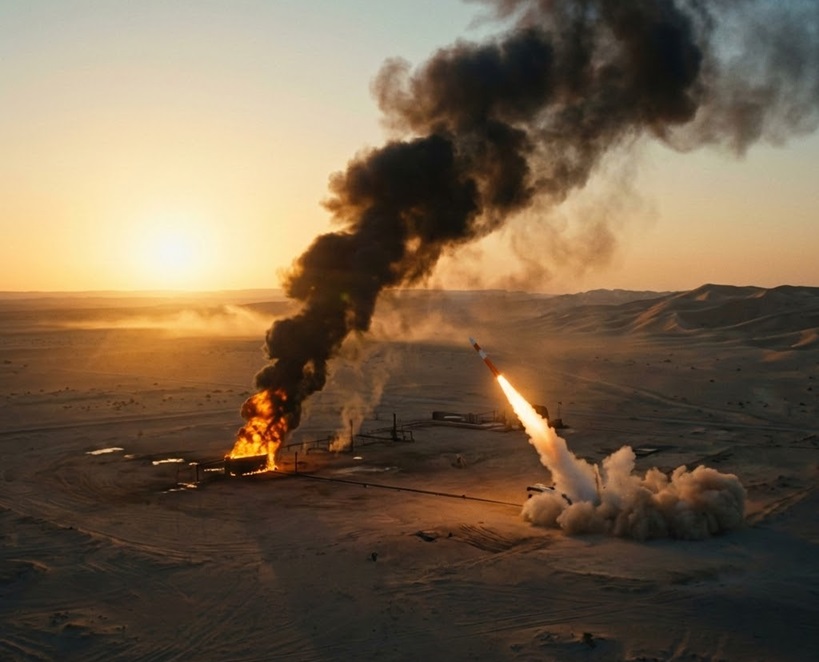
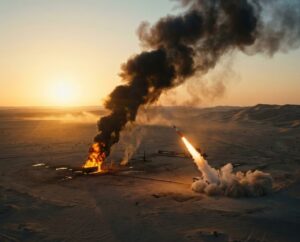
According to reports from the Wall Street Journal and CNN, two ballistic missiles were launched toward Diego Garcia—a remote coral atoll roughly 4,000km (2,500 miles) from Iranian shores.
- The Outcome: One missile reportedly failed mid-flight, while the second was intercepted by a US warship.
- The Timing: The incident occurred just as UK ministers were convening in London to discuss their involvement in the war, which was initiated by the US and Israel on February 28.
Why This Changes the “Calculus”
For years, intelligence agencies estimated Iran’s missile range to be capped at roughly 2,000km. If Iran is indeed behind this launch, it reveals a terrifying leap in military capability.
“These missiles to Diego Garcia mean Iran has 4,000km-plus ballistic missiles… if you reverse the direction, they could reach London.” — Muhanad Seloom, Doha Institute for Graduate Studies
The Stakes for Europe
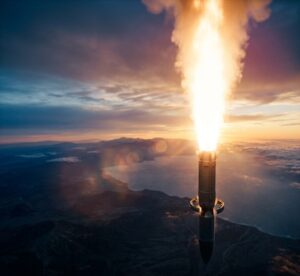
Israel’s military chief, Eyal Zamir, has already doubled down on this threat, claiming the missiles used were two-stage intercontinental ballistic missiles (ICBMs). The message is clear: if a base in the middle of the Indian Ocean is within reach, so are Berlin, Paris, and Rome.
A War of Denials and Red Lines
Iran’s Foreign Minister, Abbas Araghchi, recently maintained that Tehran intentionally limits its missile range to stay below the 2,000km mark to avoid being perceived as a global threat.
However, analysts suggest the denial might be a strategic move to avoid immediate, massive retaliation while still “sending a signal.” By targeting a distant, high-value asset like Diego Garcia—which supports everything from B-2 bombers to long-range refueling—Iran is demonstrating that no Western asset is truly “out of range.”
The UK’s Balancing Act
Foreign Secretary Yvette Cooper has condemned the “reckless” threats but continues to walk a fine line. While the UK is defending its personnel and the vital Strait of Hormuz (currently blocked by Tehran, causing global oil prices to skyrocket), London has repeatedly stated it does not want to be drawn into a wider offensive conflict.
The Broader Context: A Region in Flux
This escalation doesn’t exist in a vacuum. It follows:
- The Start of the War (Feb 28): Launched by the US and Israel to degrade Iran’s nuclear program.
- The Death of Ali Khamenei: Killed in strikes three weeks ago, leaving a power vacuum and a vow of retaliation.
- The “Greater Israel” Rhetoric: Increasing tension as members of the Israeli cabinet push for territorial expansion.
Final Thoughts
The alleged strike on Diego Garcia is more than just a failed military operation; it is a proof of concept. It suggests that the “cost of the equation” has changed. As the battlefield expands geographically, the ability of any nation to control the escalation becomes increasingly slim.