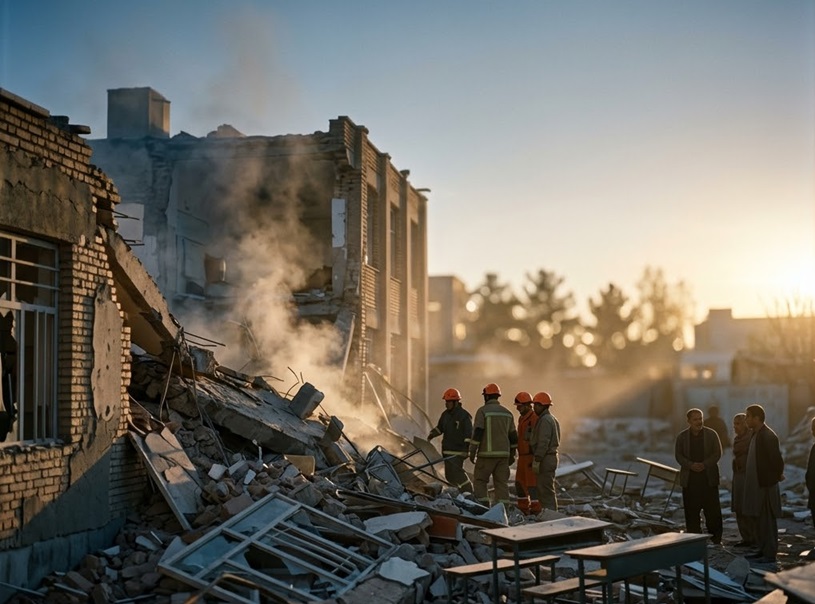


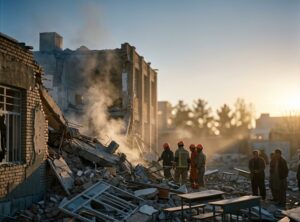
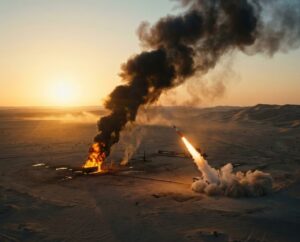
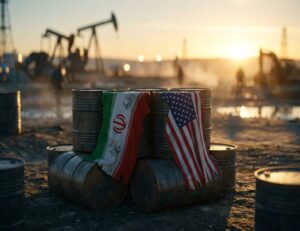




The air in the Middle East has never felt heavier. Following the unprecedented joint strikes by the United States and Israel—and the confirmed death of Supreme Leader Ayatollah Ali Khamenei—the region has moved past “sabre-rattling.” We are now witnessing a high-stakes demonstration of Iran’s military evolution, a strategy built specifically to counter the world’s most advanced air forces with a “wall of fire.”
As the world holds its breath, the central question isn’t just if there will be a wider war, but what tools Iran is using to wage it.
1. The “Flying Artillery”: A Missile Force Without Peer
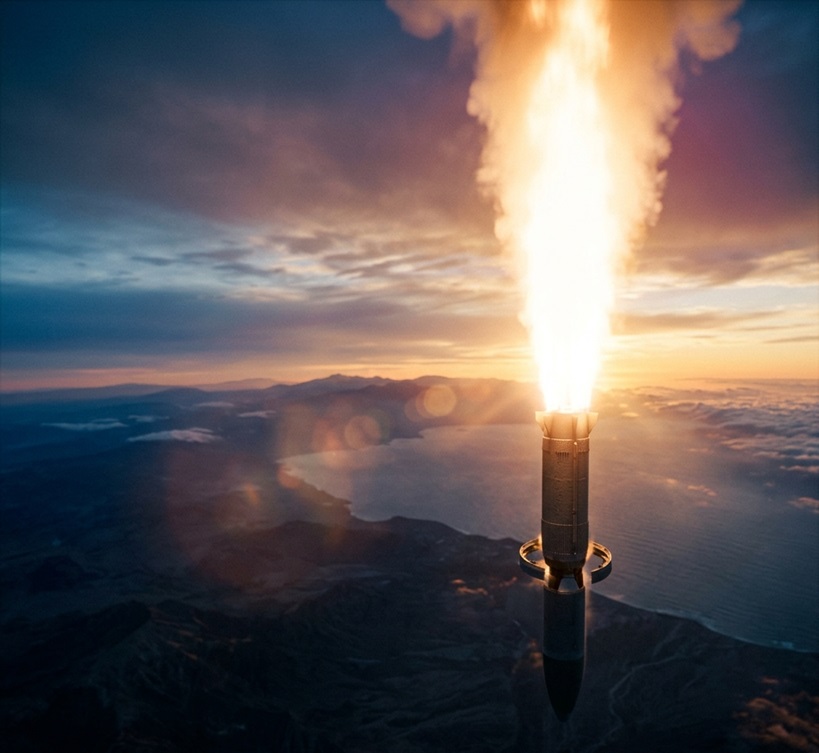
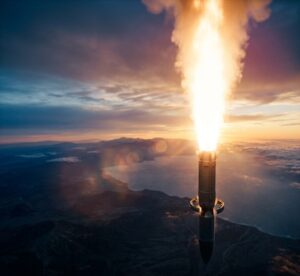
Iran’s military doctrine is born of necessity. Lacking a modern air force to compete with F-35s, Tehran has spent decades perfecting the Middle East’s largest ballistic missile program. Analysts view this as their “primary hammer.”
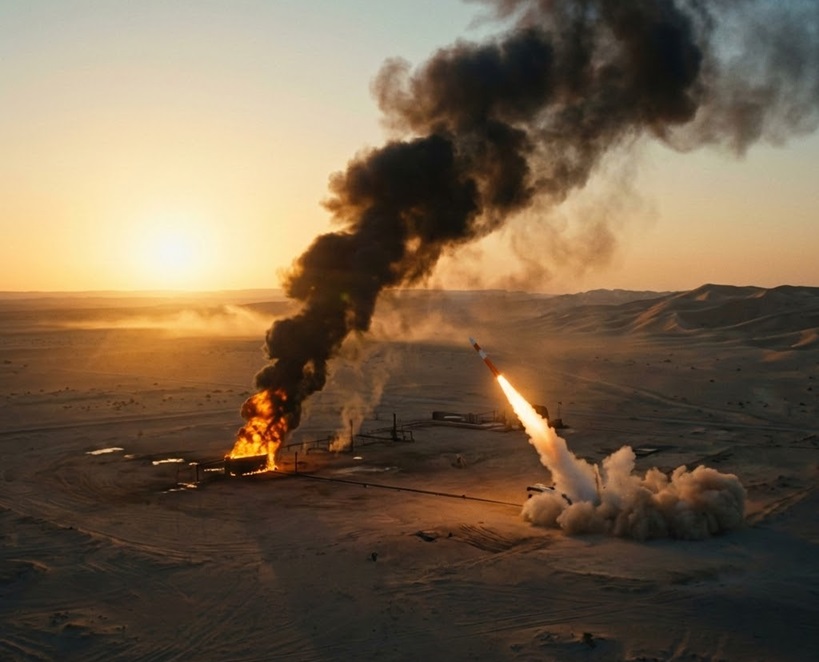
- The First Punch: Short-range variants like the Zolfaghar and Qiam-1 are designed for rapid, high-volume volleys. These aren’t just weapons; they are psychological tools intended to overwhelm local defenses in Kuwait, Bahrain, and the UAE.
- The Strategic Reach: Medium-range missiles like the Sejjil and Khorramshahr bring Israel and distant US naval assets into the crosshairs. The Sejjil is particularly feared because it uses solid fuel, meaning it can be prepped and launched in minutes, giving satellite surveillance almost no time to react.
- The Hypersonic Wildcard: The Fattah series represents Tehran’s claim to elite status. If these missiles can truly maneuver at hypersonic speeds as claimed, they represent a nightmare scenario for traditional missile defense systems like the Patriot.
2. The Low-Altitude Nightmare: Drones and Cruise Missiles
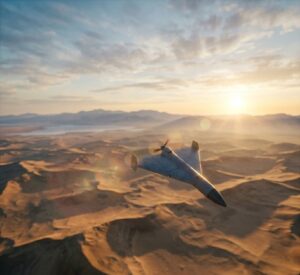
While ballistic missiles scream through space, Iran’s “low and slow” arsenal presents a different kind of terror.
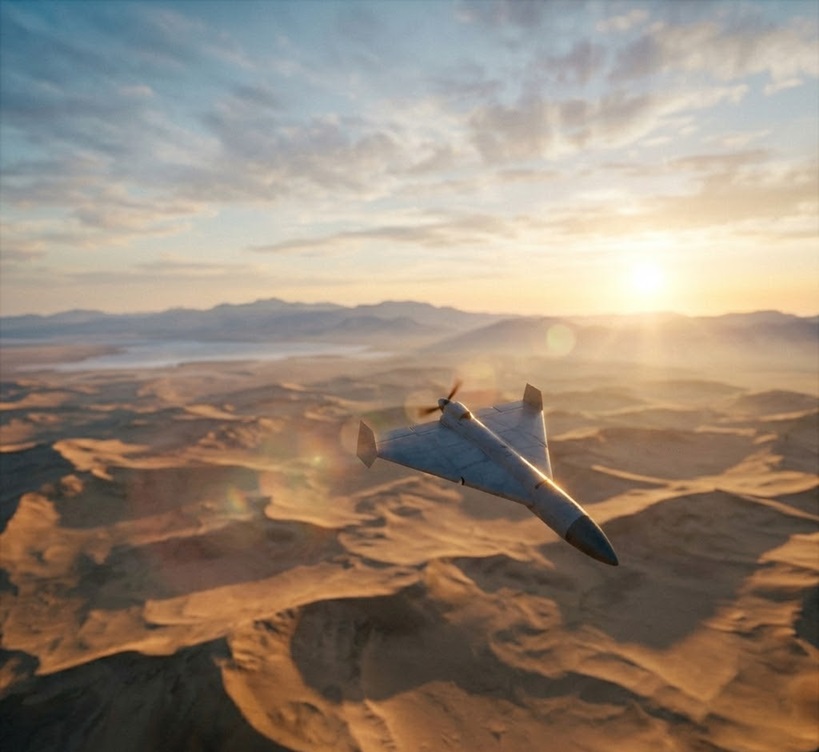
- Saturation Warfare: Using the now-infamous Shahed “suicide” drones, Iran can launch “swarms” that cost a fraction of the missiles used to shoot them down. The goal isn’t just to hit a target; it’s to bleed the enemy’s multi-million-dollar defense stockpiles dry.
- The Invisible Threat: Cruise missiles like the Soumar and Paveh hug the terrain, weaving through valleys to avoid radar detection. This “terrain-masking” makes them incredibly difficult to intercept until they are seconds away from impact.
3. The “Missile Cities” and the Strategy of Survival
Perhaps the most chilling aspect of Iran’s defense is its resilience. Over the last 20 years, the IRGC has hollowed out mountains to create “Missile Cities.” These are self-contained underground bases with their own power, hospitals, and launch tubes.
This means that even if the US and Israel achieve total air superiority, Iran can continue to fire from beneath the earth for weeks, if not months. It turns a “surgical strike” into a grueling war of attrition.
4. Choking the Global Pulse: The Strait of Hormuz
Iran’s weapons aren’t just aimed at barracks; they are aimed at the global gas tank. By deploying naval mines, fast-attack “swarm” boats, and anti-ship missiles along the Strait of Hormuz, Tehran can effectively hold the world economy hostage.
We are already seeing the effects: Maersk and other shipping giants have suspended crossings. If the “energy artery” of the world is severed, the economic fallout will reach every corner of the globe—from the price of bread in Cairo to the cost of heating in London.
The Final Word: A Campaign, Not a Moment
The message from Tehran is clear: this is no longer a limited operation. With the “Axis of Resistance”—including Hezbollah and the Houthis—now fully mobilized, the conflict is stretching across multiple fronts. We are no longer talking about a “cycle of violence”; we are looking at a fundamental shift in the map of the Middle East.
The world watches the horizon, waiting to see if diplomacy can still find a foothold, or if the “duty of revenge” will lead us all into a conflict from which there is no easy return.