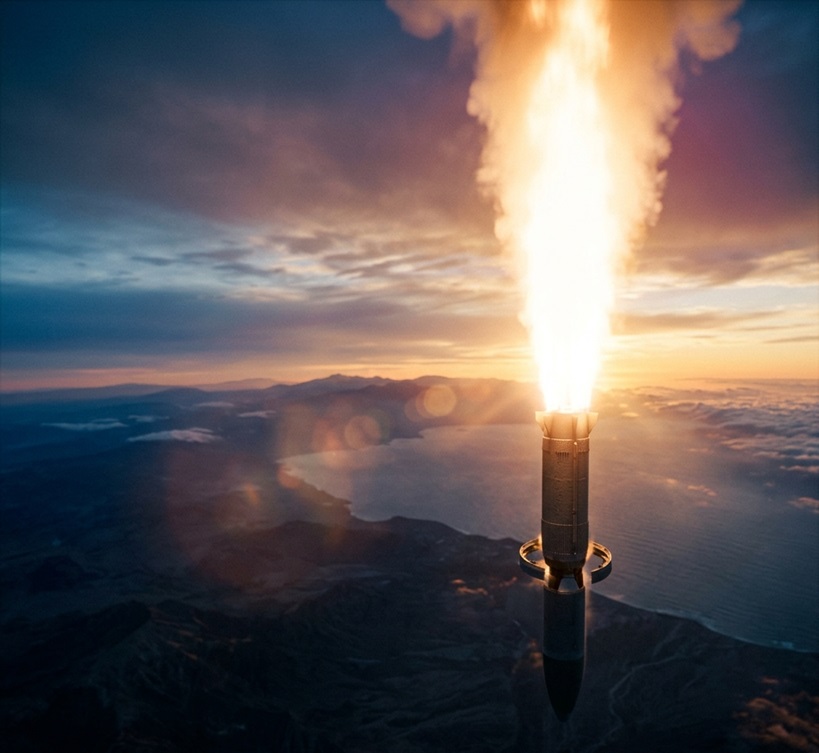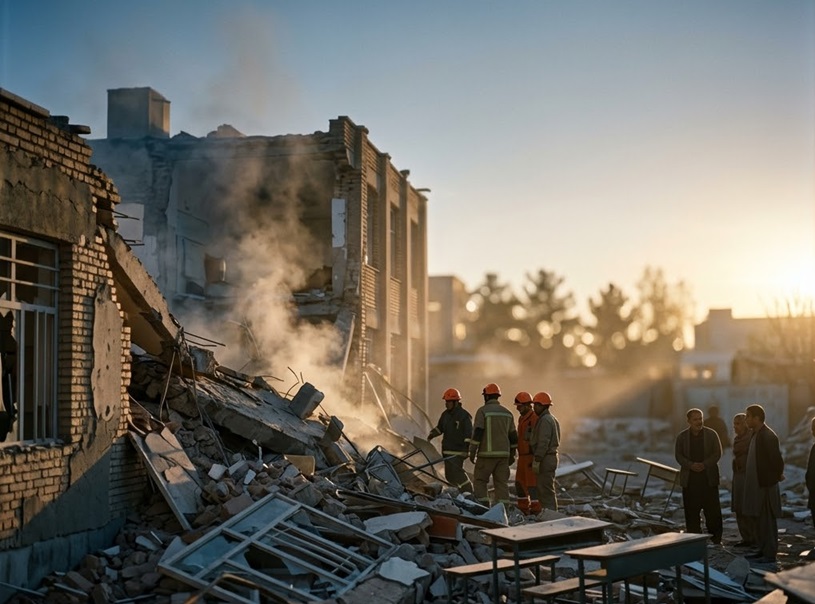




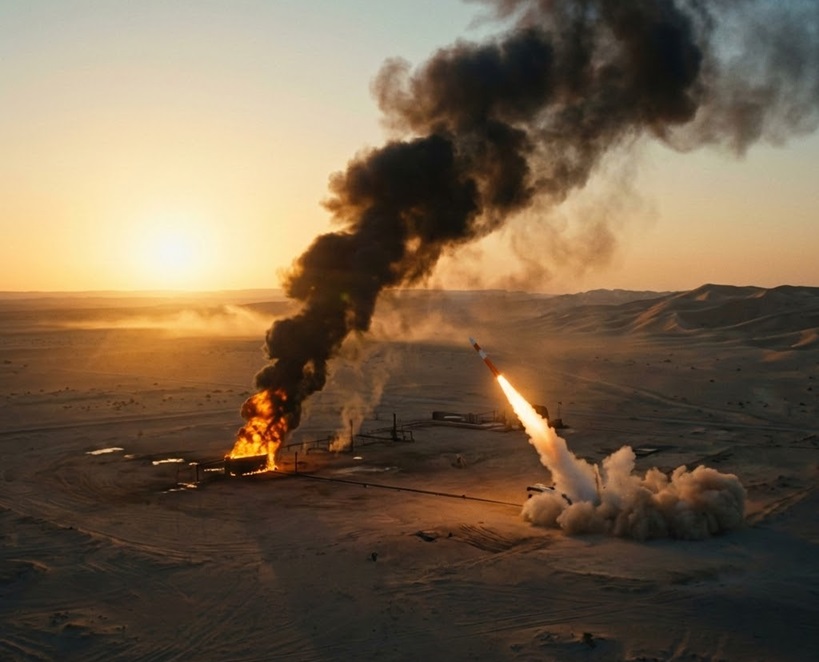
The world in March 2026 feels like a pressurized cabin with a shattered window. We are currently ten days into a joint U.S.-Israeli military campaign against Iran, a conflict that has transitioned from “targeted strikes” to a full-scale regional firestorm.
As of March 10, 2026, we aren’t just watching a war on the news; we are feeling it at the gas pump, in our grocery bills, and in the sheer, nauseating volatility of the global markets.
The 24-Hour Heart Attack
Just yesterday, the global energy market suffered what can only be described as a cardiac arrest. Crude oil prices, which had surged toward a staggering $120 a barrel, suddenly plunged below $90 following a single press conference from President Trump in Miami.
To the casual observer, a $30 drop in a day might look like a win. To a radical critic, it is a terrifying symptom. When the price of the world’s most essential commodity can swing by 25% based on the “mood” of a politician at a golf club, stability is officially dead. We are no longer governed by the laws of supply and demand; we are governed by the laws of “What did he just say?”
The Great Geopolitical Hypocrisy
The most jarring development is the Trump administration’s sudden pivot toward sanctions relief for countries like Russia and Venezuela.
Let’s look at the irony:
- The Conflict: The U.S. and Israel launched strikes on February 28 to “neutralize” Iran.
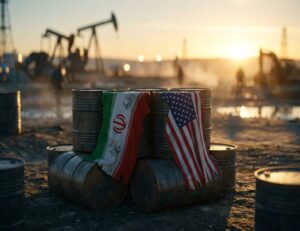
- The Consequence: Iran responded by effectively closing the Strait of Hormuz, trapping 20% of the world’s oil supply.
- The Solution: To keep American gas prices from hitting $7.00 a gallon before the midterm elections, the U.S. is now considering easing sanctions on Russia, the very nation it spent years trying to isolate.
This is the “Pyromaniac’s Fire Extinguisher” strategy. You cannot claim to be the guardian of global order while simultaneously setting the Middle East on fire and then begging your other “enemies” to help you put out the economic flames. It exposes a hard truth: Principles are luxury goods. When oil hits $150, the “moral high ground” is the first thing we sell for parts.
“We have sanctions on some countries. We’re going to take those sanctions off until this straightens out. Then, who knows… there’ll be so much peace.” — President Donald Trump, March 9, 2026
The Myth of the “Quick War”
Trump’s rhetoric remains predictably contradictory. He tells CBS the war is “pretty much complete” and “ahead of schedule,” while simultaneously telling lawmakers that attacks won’t stop until the enemy is “totally and decisively defeated.”
History has a 100% failure rate for “quick wars” in the Middle East. With the appointment of Mojtaba Khamenei as Iran’s new Supreme Leader a man described as a hardliner with deep IRGC ties Tehran is signaling defiance, not surrender. They aren’t just fighting for territory; they are fighting for the survival of a 47-year-old revolutionary identity.
Why It’s Slipping Through Our Fingers
Global stability requires predictability. Right now, we have none.
- Chokepoint Fragility: The “de facto” closure of the Strait of Hormuz has forced producers like Qatar and Saudi Arabia to consider force majeure. If ships can’t move, the oil might as well not exist.
- The Inflation Tsunami: We are seeing “Stagflation 2.0.” Growth is stalling because of war uncertainty, but prices are skyrocketing because of energy costs.
- Diplomacy by Transaction: International relations have become purely transactional. We lift sanctions on Russia to spite Iran; we pressure India to buy “shadow fleet” oil to lower the global average.
The Radical Bottom Line
We are witnessing the end of the post-WWII era of “managed stability.” In its place is a new era of Chaos Management.
The “War Swings” we see today are the result of a world that has forgotten how to build peace and has instead settled for “rearranging the sanctions.” If the Strait remains closed through April, no amount of Russian oil or Miami press conferences will stop a global depression.
Stability isn’t slipping through our fingers, we are opening our hands and letting it fall because we’re too busy reaching for a cheaper gallon of gas