



The drums of war in the Middle East have shifted from a steady beat to a deafening roar. As of today, March 29, 2026, the rhetoric coming out of Tehran has reached a fever pitch. Mohammad Bagher Ghalibaf, the Speaker of the Iranian Parliament, recently issued a chilling warning: while the United States publicly talks of “peace deals” and “15-point plans,” it is secretly sharpening its bayonets for a ground invasion.
But while the titans clash in the Gulf, the first casualties are being claimed thousands of miles away in the streets of Manila and the provinces of the Philippines. We are witnessing a terrifying paradox: a world that speaks the language of diplomacy while executing the logistics of destruction.
The Iranian Accusation: Smoke, Mirrors, and “Epic Fury”
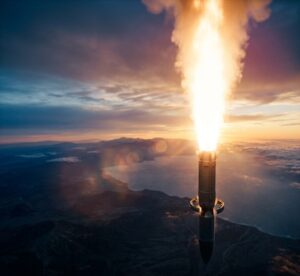
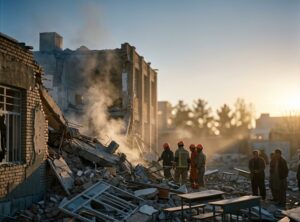
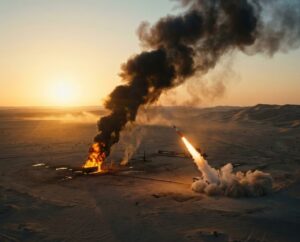
For over a month, “Operation Epic Fury” the joint U.S.-Israeli campaign has battered Iranian infrastructure. The official line from Washington is that this is a surgical effort to dismantle nuclear capabilities. However, the death of the Supreme Leader and the subsequent arrival of a U.S. warship carrying 3,500 personnel in West Asia tell a different story.
Ghalibaf’s latest statement is a masterclass in defiant skepticism. He claims the U.S. is “secretly planning a ground attack” under the cover of diplomatic negotiations hosted by Pakistan. To the critic’s eye, this looks like a classic “Double-Track” strategy. History (Iraq 2003, Libya 2011) has taught Tehran that the U.S. often uses the “negotiation table” not as a place for resolution, but as a waiting room while the heavy armor moves into position.
The Criticism: Is Iran being paranoid, or is the U.S. being predatory? The reality likely lies in the middle. By refusing to rule out “boots on the ground” in recent congressional briefings, the Trump administration has effectively killed any trust. You cannot offer a 15-point peace plan in one hand while holding a tactical map of Tehran in the other. This “diplomacy by duress” isn’t statecraft; it’s a siege.
The Economic Shrapnel: Why the Philippines Bleeds First
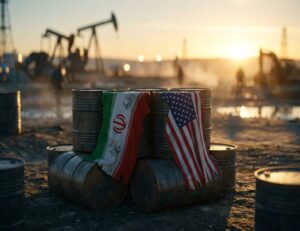
The most tragic irony of this conflict is its geographical reach. The Strait of Hormuz, a narrow chokepoint through which 25% of the world’s maritime oil passes, is currently a graveyard for global commerce. Because the Philippines is 98% dependent on imported fuel much of it from this exact region it has become the “canary in the coal mine” for the global economy.
As of this week, the effects in the Philippines are nothing short of catastrophic:
- The 100-Peso Liter: In various regions, diesel and gasoline have breached the P100 per liter mark.
- The Shrinking Peso: The Philippine peso has hit a record low (nearly P16.50 to the UAE Dirham), making every imported barrel of oil even more expensive.
- Emergency Measures: The government has been forced to adopt a four-day workweek just to conserve fuel.
The Criticism: The Philippine situation exposes the hollow nature of “global stability.” The Philippines is a loyal ally to the West, yet it is being economically strangulated by a war it did not start and cannot stop. The “targeted subsidies” and “excise tax suspensions” recently signed by President Marcos are merely Band-Aids on a severed artery. As long as the U.S. and Iran remain locked in this ego-driven stalemate, the Filipino worker the jeepney driver, the farmer, the delivery rider is the one paying the “war tax.”
A World on the Brink: The Failure of Leadership
The criticism must be leveled at both sides.
- Iran continues to use the “fire and brimstone” rhetoric, threatening to “set American soldiers on fire,” which only validates the hawks in Washington who want an invasion.
- The U.S. is playing a dangerous game of “strategic ambiguity.” By allowing the conflict to drag into its second month without a clear exit strategy, they have allowed oil markets to spiral, effectively punishing developing nations like the Philippines more than they are punishing the Iranian regime.
Conclusion: The Cost of “Epic Fury”
If a ground invasion begins, the current P100/liter fuel price in Manila will look like a bargain. We are looking at a potential global depression triggered by an energy vacuum.
Diplomacy should not be a “cover” for invasion; it should be the alternative to it. Right now, the world is watching a high-stakes poker game where the chips being bet aren’t plastic they are the livelihoods of millions of people in the Indo-Pacific.
It is time for the international community to demand more than just “15-point plans” and “defiant warnings.” We need an immediate de-escalation before the sparks in the Strait of Hormuz set the entire global economy ablaze.